
11 Data Entry Jobs to Work from Home for Beginners
No experience, no degree, no problem — here’s how to actually get started and what to realistically expect.
My second semester of college, I was dead broke. Not “I can’t afford a coffee” broke — I mean “I skipped lunch three days in a row because I miscalculated my grocery budget” broke. My campus job paid $9 an hour and barely covered my phone bill. I needed something I could do from my dorm room, at weird hours, with zero professional experience to speak of.
If you’re in a similar spot — student, stay-at-home parent, someone just trying to find a legit online income stream — this post is for you. Here are 11 data entry jobs that actually exist, what they pay, and where to find them.
$15–$25/hr is the average rate for beginner data entry workers. Specialized roles like medical coding can reach $25+ per hour as you gain experience. (Source: Paybump)
But First — What Even Counts as Data Entry?
Data entry is any job where your main task is moving, organizing, or cleaning up information — typing records into spreadsheets, updating databases, converting PDFs to editable formats, transcribing audio, and so on. The pay isn’t always glamorous, but the barrier to entry is genuinely low. You mostly need a decent typing speed, an eye for detail, and access to a laptop.
I’d aim for at least 50 words per minute before you start applying — Typing.com is free and will get you there in a couple of weeks if you practice. That small investment pays off immediately.
“The best data entry jobs aren’t just about speed. Clients pay more for accuracy. A slow, careful worker beats a fast, careless one every time.”
The 11 Jobs
1. Basic Spreadsheet Data Entry
Pay: $10 – $18/hr
This is the entry point. Businesses constantly need someone to take information from one place — a form, a PDF, a scanned document — and put it cleanly into a spreadsheet. If you know basic Excel or Google Sheets, you’re already qualified.
Where to find it: Upwork, Fiverr, and Freelancer.com all have a constant flow of these. Search “spreadsheet data entry beginner” and filter for jobs under $500 — those are the smaller projects where clients are more willing to hire someone without reviews yet.
2. Online Form Filling
Pay: $8 – $15/hr
Companies running surveys, market research, or customer registration campaigns often need someone to manually transfer responses into their system. It’s repetitive, but it’s exactly the kind of task you can do while half-watching something on Netflix.
Worth knowing: always verify these are legitimate before accepting payment info. Stick to verified clients on established platforms.
3. PDF to Excel / Word Conversion
Pay: $12 – $20/hr
Old documents, scanned contracts, printed tables — businesses need this information in editable formats all the time. You’re basically retyping structured content accurately. It pays slightly better than basic entry because it requires formatting knowledge.
This was actually my first real gig. A small law firm needed old client intake forms converted. Took me about three hours, made $38. Not bad for a Tuesday afternoon.
4. CRM Data Entry
Pay: $13 – $22/hr
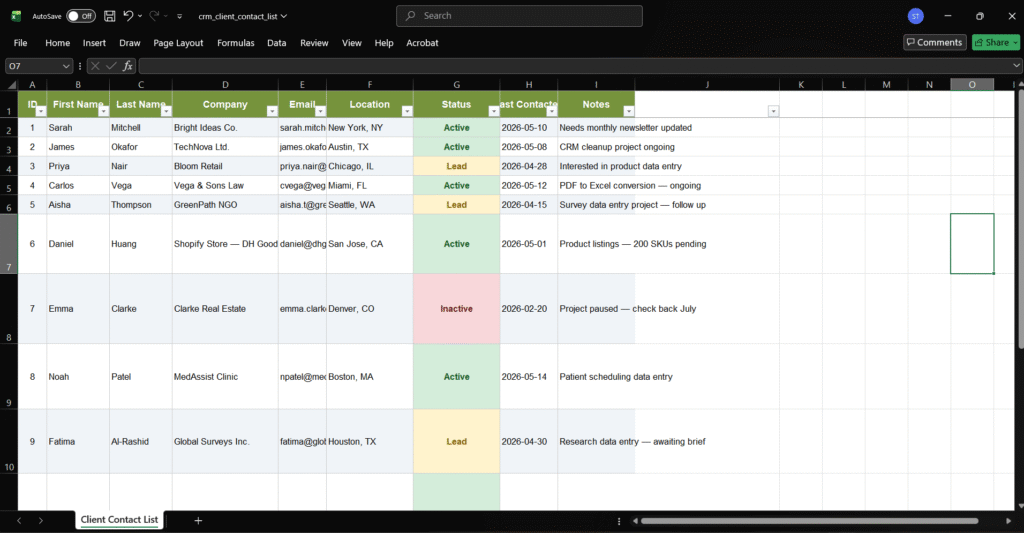
CRM stands for Customer Relationship Management — tools like HubSpot, Salesforce, or Zoho that businesses use to track their leads and customers. When companies get messy or outdated contact lists, they need someone to clean and update them manually.
This pays a bit more because there’s a specific tool involved. Most CRMs have free trials — spend a couple hours clicking around HubSpot’s free version and you can honestly say you know your way around it.
5. Audio / Video Transcription
Pay: $10 – $25/hr
Listening to recordings and typing out what’s being said. Podcasts, interviews, legal depositions, YouTube videos — transcription demand is enormous. The pay range is wide because it depends heavily on audio quality and whether specialized vocabulary is involved (medical transcription, for instance, pays more).

Rev.com is the most common starting platform. They test your accuracy before approving you, so take it seriously.
6. E-commerce Product Data Entry
Pay: $12 – $20/hr
Online stores — especially on Shopify, Etsy, or Amazon — need product listings: titles, descriptions, prices, dimensions, categories. It’s surprisingly detail-heavy and ongoing. Once a store trusts you, this can become consistent monthly work, which is where the real value is.
If you already spend time on these platforms as a shopper, you understand the format better than most applicants already.
7. Medical Data Entry (No Certification Required)
Pay: $15 – $28/hr
Before you scroll past this — not all medical data entry requires medical training. Patient scheduling, insurance information entry, and basic record updating are tasks hospitals and clinics outsource to virtual assistants regularly.
The ones that do require certification (like medical coding) pay $25+ per hour and are worth considering if you want to specialize. There are short online courses for this — AAPC offers beginner-friendly programs.

8. Real Estate Data Entry
Pay: $13 – $20/hr
Real estate agents are notoriously disorganized with their data. Property listings, lead databases, MLS updates — there’s always work here. A lot of agents hire virtual assistants for this through platforms like PeoplePerHour or directly via LinkedIn.
The work is fairly repetitive and structured, which makes it easy to get into a rhythm once you understand their system.
9. Web Research and Data Collection
Pay: $12 – $22/hr
This sits at the edge of data entry and research. Clients ask you to find specific information — email addresses, company details, competitor prices — and compile it into a clean spreadsheet. It requires more independent thinking than pure entry jobs but pays accordingly.
I’d recommend this as your second type of gig once you have a review or two. It signals versatility to future clients.
10. Survey and Research Data Entry
Pay: $10 – $16/hr
Market research firms, universities, and NGOs run studies and need the collected responses entered and organized. This is often project-based — a few weeks of work, then it ends. Good for supplemental income between other gigs.
Platforms like Clickworker and Microworkers are good starting points for this category, though the pay per task is lower. Volume is how you make it add up.
11. Virtual Assistant with Data Entry Focus
Pay: $15 – $30/hr
This is the graduation point. Once you’ve done a few data entry jobs, you can package yourself as a virtual assistant who specializes in data management. VA roles pay more, offer more consistent work, and often turn into long-term contracts with a single client — which means no constant job hunting.
If this interests you, check out the work-from-home jobs guide on LeafyLeap — there’s a whole section on how introverts especially thrive in VA roles because the work is largely independent.
Where to Actually Find These Jobs
The platforms worth your time: Upwork (best for beginners building a profile), Fiverr (create a gig and let clients come to you), Rev.com (specifically for transcription), and FlexJobs (vetted listings, worth the small membership fee if you’re serious).
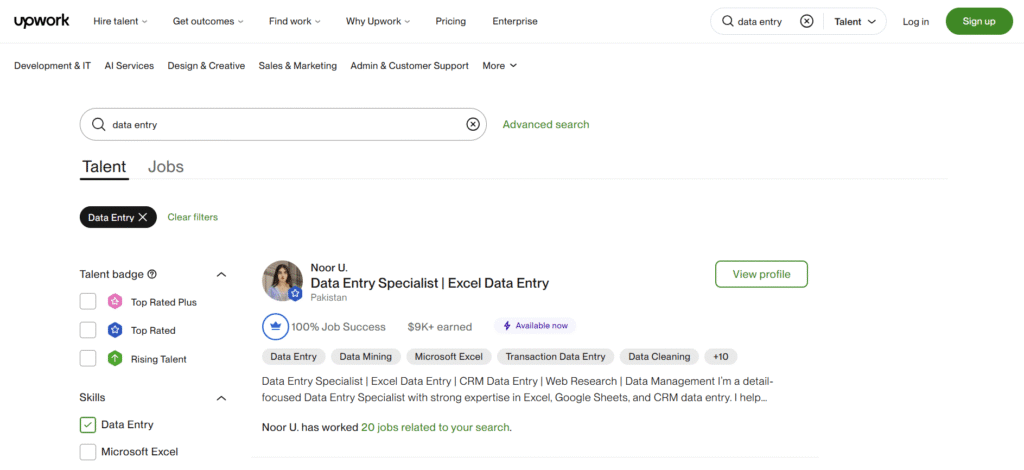
Avoid any “data entry job” that asks you to pay an upfront fee to access their work. That is always a scam. Legitimate employers pay you, not the other way around. The Upwork data entry listings are a reliable starting point — filter for entry-level and payment verified clients only.
53% of Gen Z workers in the US are doing some form of independent or freelance work. The gig economy isn’t a fallback plan anymore — it’s a real career strategy. (Source: Freelancing Statistics 2026)
A Realistic Income Expectation
I want to be straight with you because a lot of blogs in this space aren’t. In your first month, you might make $100–$300. That’s normal. You’re building a profile, learning the platforms, and figuring out what you’re good at. By month two or three, if you’re consistent, $500–$800 a month part-time is genuinely achievable.
It’s not “quit your job” money immediately. But as a college student, an extra $400 a month changes your life — that’s groceries, textbooks, or the start of an emergency fund. If you want ideas on what to actually do with that extra income, the money management for beginners guide here on LeafyLeap is a good next read.
And if data entry feels too limited, know that it’s often a doorway. Many freelancers start here, build client relationships, and pivot into higher-paying work like content writing, social media management, or virtual assisting. The point isn’t to do data entry forever — it’s to start earning while you figure out the bigger picture.
Which is honestly the whole point of LeafyLeap. Small steps that compound. Start somewhere.